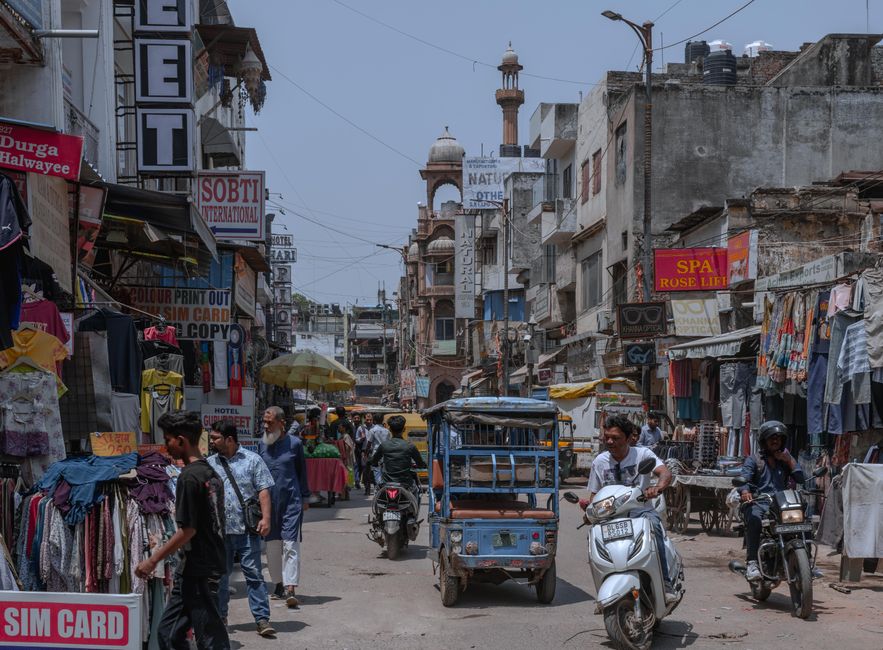
Delhi's public record offices are sitting on a problem that has been building quietly for years. Duplicate images — the same photographs scanned multiple times, misfiled under different reference numbers, or uploaded repeatedly across departmental servers — now run into the hundreds of thousands across municipal and heritage databases. The immediate pressure to clean up the mess comes from the Delhi Metro Rail Corporation's Phase 4 expansion, which has accelerated the digitisation of land records, heritage surveys, and environmental impact files along corridors stretching from Janakpuri West to R.K. Ashram Marg.
Why does this matter now? The duplication problem has moved from being a bureaucratic inconvenience to a legal liability. Land acquisition disputes tied to the Phase 4 corridors have repeatedly been complicated in hearings at the Delhi High Court when contradictory photographic evidence — the same site photographed and filed under multiple reference codes — has been submitted by different agencies. The Archaeological Survey of India's Delhi circle office, which maintains photographic records of protected monuments including structures in Mehrauli and the Qutb Minar complex, has flagged internally that its digitisation drives of 2022 and 2023 left large volumes of duplicate files unresolved.
The Scale of the Problem on the Ground
The duplication is not uniform. It concentrates in three areas. First, the Municipal Corporation of Delhi's building plan database, particularly for properties in Shahjahanabad — the walled city of Old Delhi — where physical records were scanned in multiple batches by different contractors without a unified deduplication protocol. Second, the Delhi Development Authority's land parcel image library, which absorbed records from three separate predecessor agencies and was never reconciled. Third, photographic archives held by the Delhi Urban Heritage Foundation, whose Chandni Chowk Redevelopment Project documentation absorbed thousands of images from NGOs, government surveyors, and press archives between 2018 and 2024.
Each duplicate image is not merely redundant. It carries a file ID, a storage cost, and in many cases a conflicting metadata tag that assigns a structure or land parcel to the wrong administrative zone. That last problem has direct consequences: at least two properties near Kashmere Gate were misclassified in 2024 zoning reviews partly because photographic evidence was duplicated under conflicting zone codes, according to documents filed in related property disputes at the Delhi High Court's division bench.
What Happens Next — and Who Decides
Three decisions are now unavoidable. The first is technical: which deduplication standard to adopt. The National Informatics Centre, which manages backend infrastructure for Delhi government databases under a central government mandate, has proposed a hash-based image fingerprinting system that can flag near-identical images even when file names differ. The Delhi government's own Information Technology department has been evaluating a competing system since February 2026. The two agencies need to agree before any rollout across MCD and DDA servers can begin.
The second decision is financial. A full deduplication and reconciliation exercise across the three main repositories — MCD, DDA, and the heritage archive — would require a dedicated procurement contract. Comparable exercises carried out by the Brihanmumbai Municipal Corporation in 2023 for its building records database ran to approximately ₹4.2 crore for the first phase alone, according to BMC budget documents from that year. Delhi's scope is larger, and any tender would need clearance from both the elected Delhi government and the Lieutenant Governor's office, a procedural friction point that has delayed IT contracts before.
The third decision is political. AAP's administration has made digitisation of citizen services a flagship pitch since 2015, with the Delhi Jal Board and the electricity subsidy scheme both held up as models. Acknowledging a systemic duplication failure in government image archives cuts against that narrative. But the Metro Phase 4 construction timetable is unforgiving — land acquisition along the Lajpat Nagar to Saket corridor is scheduled to conclude by March 2027, and clean photographic records are a legal requirement at each stage.
The NIC-Delhi government technical committee is expected to present a joint recommendation to the Chief Secretary's office before the end of July 2026. If the two departments cannot agree on a unified standard by then, the fallback is a piecemeal fix — agency by agency, corridor by corridor — which archivists and legal practitioners working on the Phase 4 files say would take years longer and cost significantly more.