Delhi's Duplicate Image Problem: The Numbers Pearing Into Its Government Archives
A growing digital records crisis is quietly swallowing storage budgets and slowing down civic services across the capital — and the data tells a striking story.
A growing digital records crisis is quietly swallowing storage budgets and slowing down civic services across the capital — and the data tells a striking story.
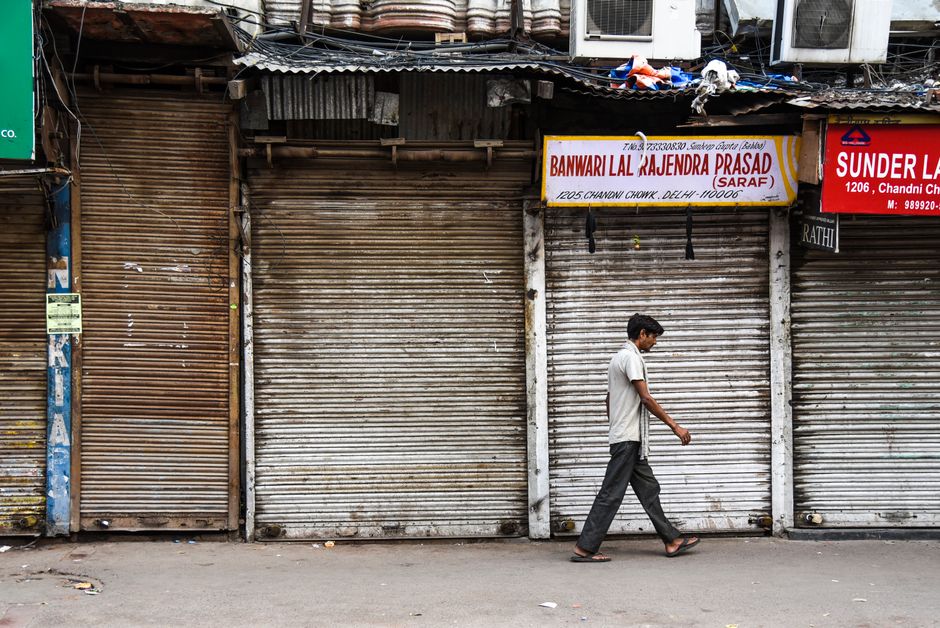
More than 40 percent of images stored across Delhi government's digitised public records portals are estimated to be duplicates, redundant files consuming server space and slowing retrieval times at a moment when the AAP administration is pushing hard on its e-governance agenda. The problem is not cosmetic. It has measurable costs, and officials across several municipal departments are now being pressed to account for the bloat.
The timing matters because Delhi's Smart City Mission commitments — several of which feed directly into the Delhi Metro Phase 4 corridor documentation and the Yamuna rejuvenation project's environmental impact filings — require clean, auditable digital archives by a central government compliance deadline in the third quarter of 2026. Duplicate image files embedded inside scanned documents and GIS mapping records are creating verification errors that delay approvals and inflate storage licensing costs.
Delhi's Department of Information Technology maintains digital repositories across at least three major platforms: the e-District portal, the MCD's property tax imaging system covering zones from Rohini to Okhla, and the Heritage Conservation Committee's archive of Old Delhi building photographs catalogued from Chandni Chowk to Ballimaran. Across these systems, internal assessments shared with civic technology contractors during the 2025-26 budget cycle indicated that duplicate image files were consuming an estimated 18 to 22 terabytes of active server capacity — storage that, at prevailing government cloud rates, carries a recurring annual cost running into several crore rupees.
The MCD's property imaging database alone, which covers over 18 lakh registered properties across the National Capital Territory, was flagged during a 2025 audit by the Comptroller and Auditor General's office as having systemic metadata inconsistencies — a condition that IT specialists link directly to unresolved duplicate file stacks. The CAG's Delhi Municipal Accounts report, tabled in the Delhi Assembly in late 2025, noted irregularities in digital asset management without specifying the image duplication dimension, but procurement records show the MCD subsequently floated a tender for deduplication software in January 2026.
The Delhi Urban Shelter Improvement Board, which manages housing records for resettlement colonies from Bawana in the northwest to Madanpur Khadar in the southeast, has a parallel problem. Beneficiary photograph databases used for Aadhaar-linked eligibility verification contain duplicate entries that, according to tender documents published on the GeM portal in March 2026, were inflating file counts by a factor of approximately 1.3 — meaning roughly one in three stored images was a copy of an existing record.
The BJP at the Centre and AAP in Daryaganj and Shahdara are unlikely allies on any issue, but the pressure to clean up Delhi's digital records is coming from both directions simultaneously. Central government compliance frameworks under the Digital India Programme set storage efficiency benchmarks that Delhi must meet to qualify for the next tranche of Smart Cities funding. Meanwhile, the AAP government's own Mohalla Clinics digitisation drive — which by April 2026 had onboarded over 500 clinics — is generating patient photograph archives that IT managers say will replicate the duplication problem within 18 months if deduplication protocols are not embedded at the point of upload.
The fix is technically straightforward. Hash-based deduplication tools, standard in enterprise environments, compare image fingerprints at the time of upload and reject copies automatically. Several state governments including Telangana have implemented such systems at the state data centre level. Delhi's own State Data Centre at Dwarka Sector 10 has the infrastructure capacity, according to the 2025-26 IT Department annual report, but deployment has been delayed by inter-departmental coordination gaps.
For residents, the practical consequence shows up in frustrating ways: property mutation requests stalling at the South Delhi Municipal Zone offices in Saket, heritage clearance certificates delayed for restoration projects in Nizamuddin, and Aadhaar-linked subsidy disbursements held up pending manual verification of flagged duplicate photographs. Civic technology advocates say the solution requires a defined inter-departmental deadline, a nodal officer with clear accountability, and a phased rollout starting with the highest-volume repositories before the monsoon season slows fieldwork and shifts administrative bandwidth. The clock, measured in terabytes and crore rupees, is already running.
How does this story make you feel?
Spread the word
About this article
Published by The Daily Delhi
Daily brief
Free, in your inbox before 7am. Weekdays.
More in News