South Delhi's Quiet Winners: Which Neighbourhoods Are Actually Delivering Investor Returns?
As Delhi's property market fragments, analysis of rental yields and capital appreciation reveals surprising performance gaps between premium postcodes.
As Delhi's property market fragments, analysis of rental yields and capital appreciation reveals surprising performance gaps between premium postcodes.
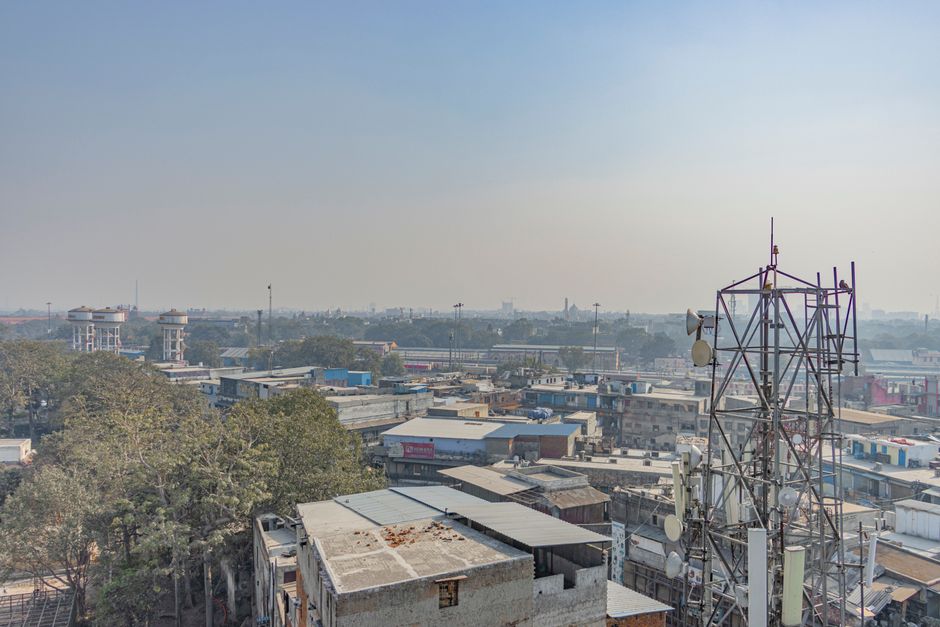
Investment property performance in Delhi tells a tale of two cities. While headline prices in South Delhi continue their ascent—with prime addresses in Vasant Vihar and Greater Kailash commanding upwards of ₹15,000 per square foot—savvy investors are increasingly examining what those prices actually *yield* in returns.
Recent market data paints a nuanced picture. A ₹2 crore apartment in central South Delhi, appreciating steadily at 4-5% annually, generates barely 1.5-2% rental yields once costs are factored in. That's increasingly problematic in an environment where fixed deposits offer comparable safety with less complexity. By contrast, emerging pockets along the extended metro corridors—Dwarka's newer sectors, parts of Rohini, and strategic Noida locations near the Aqua Line—are delivering 3-4% yields, sometimes higher, with faster appreciation cycles of 6-8% as infrastructure matures.
The Gurugram spillover effect cannot be ignored. Properties within 2km of metro stations in Sector 84-89 have appreciated 12-15% over three years while maintaining 3.5% yields. Investors who bought in these zones five years ago have seen capital gains of 40-50%, compared to 25-30% in equivalent South Delhi holdings.
Consider the ground reality: a family apartment near Select Citywalk in Saket—premium South Delhi—might cost ₹3.5 crore and rent for ₹1.2 lakh monthly. That's 4.1% gross yield. An equivalent property in Sector 62, Noida, costs ₹2.2 crore and rents for ₹95,000 monthly, yielding 5.2%. After property tax, maintenance, and vacancy periods, South Delhi investors are clearing 1.8-2.2% net yields; Noida investors are hitting 3.5-4%.
Location within neighbourhoods matters enormously. Along the Rajendra Place–Karol Bagh corridor, where metro connectivity and commercial density create sustained demand, 2-3 year holding periods show consistent 8-10% annualised returns. The same cannot be said for quieter South Delhi enclaves without commercial proximity.
For institutional investors and NRIs, the data suggests a portfolio approach: South Delhi remains a wealth storage and prestige play, but yields are compressed by capital concentration. Mid-market neighbourhoods with expanding metro access and emerging commercial hubs—think parts of East Delhi, Sector 92 Gurgaon, and eastern Noida—are where income returns cluster. The question for 2026 isn't whether Delhi property appreciates, but where investors are actually making money in real time.
This article was compiled by AI from the sources linked above and screened before publishing. See our editorial standards.
How does this story make you feel?
Spread the word
About this article
Published by The Daily Delhi
Daily brief
Free, in your inbox before 7am. Weekdays.
More in Property