What Delhi's Auction Results and Price Data Are Really Signalling About Affordable Housing
Empty plots fetching record sums while affordable schemes languish reveal a market fundamentally misaligned with policy intent.
Empty plots fetching record sums while affordable schemes languish reveal a market fundamentally misaligned with policy intent.
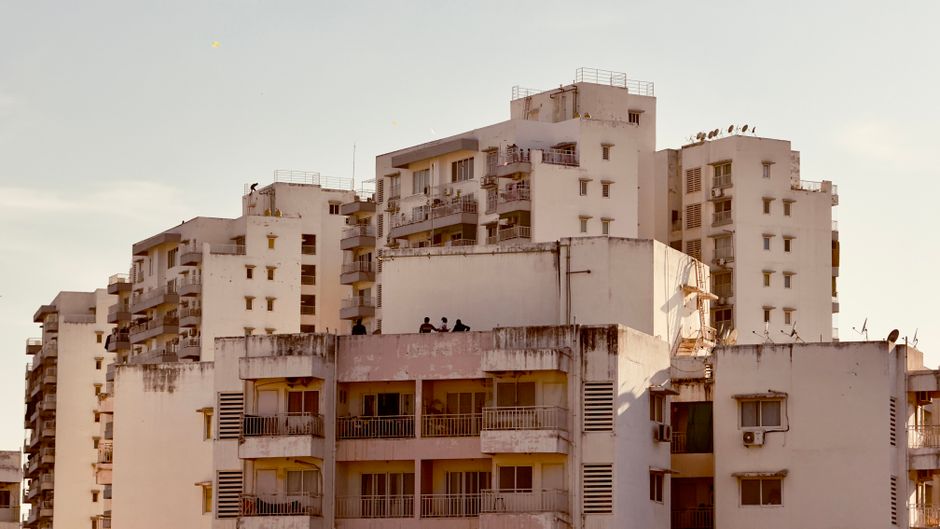
Delhi's property market is sending contradictory signals. While the city's average land price hovers around ₹8,000 per square foot, recent auction outcomes suggest policymakers' affordable housing ambitions are colliding with raw market economics.
Last month's DMRC land auction near Dilshad Garden—a plot that would theoretically qualify for low-income housing projects—sold at nearly double the estimated reserve price. The buyer was a private developer, not a housing cooperative or government agency. Meanwhile, applications for subsidised flats under the Delhi Development Authority's affordable housing scheme have stalled at processing centres across Dwarka and Rohini, with waiting lists stretching into years.
The price story tells this tale most clearly. In South Delhi's established pockets like Greater Kailash and Defence Colony, where older properties still trade at market rates, buyers are increasingly priced out of ownership entirely. Yet in emerging NCR corridors—Gurgaon's Sector 84, Noida's Techzone IV—prices are climbing faster than salary growth, compressing the affordability sweet spot to near-extinction.
Auction data from the last 18 months reveals the problem. Government land parcels, when sold to the open market, attract speculative bidding that inflates acquisition costs. Developers then pass these sums downstream, making "affordable" projects economically unviable unless heavily subsidised. The Housing and Urban Affairs Ministry's own data shows that of 10,000 homes promised under recent schemes citywide, barely 3,000 units are near completion across South Delhi, East Delhi, and the outer rings.
What's particularly telling is where money is flowing. Premium micromarkets—DLF's ongoing projects in Gurugram, new metro corridor developments along the Blue Line extension—continue attracting domestic and NRI capital. Meanwhile, genuinely affordable zones like Rohini and Greater Noida West see slower velocity and builder reluctance, signalling that profit margins there remain too thin without government backing.
The auction price inflation also undermines land banks. When a state-owned property sells for ₹15,000–20,000 per square foot in a competitive bid, the implicit cost-base for any subsequent affordable project becomes unsustainable without massive cross-subsidy. Policy-makers now face an uncomfortable choice: either absorb higher acquisition costs through budgets, or accept that market-driven auctions will continue pricing affordable housing out of reach.
Until auction mechanisms better align with housing equity goals—perhaps through reserved bidding, developer selection criteria tied to affordability quotas, or tiered pricing structures—Delhi's headline housing shortage will persist alongside its actual constraint: not supply, but distribution.
This article was compiled by AI from the sources linked above and screened before publishing. See our editorial standards.
How does this story make you feel?
Spread the word
About this article
Published by The Daily Delhi
Daily brief
Free, in your inbox before 7am. Weekdays.
More in Property