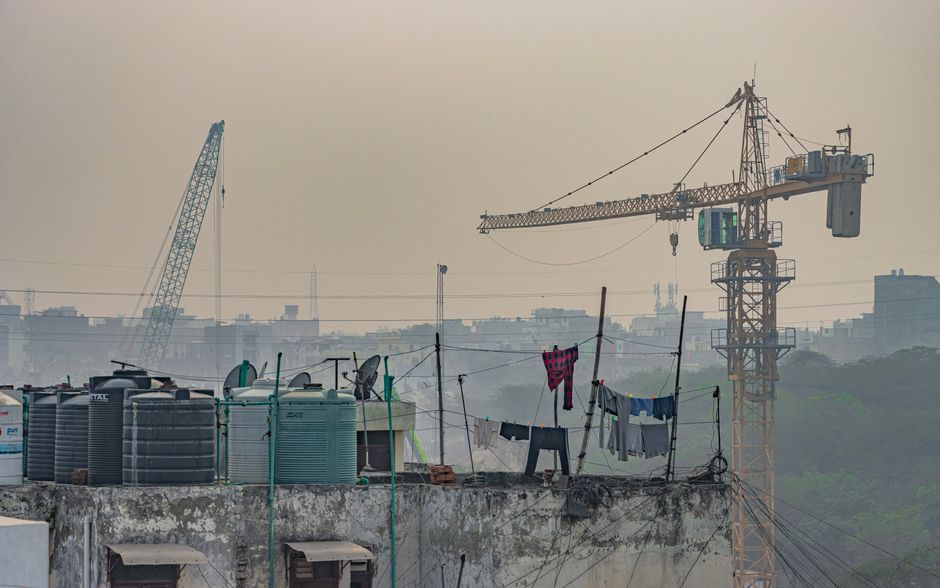
Delhi's property market has entered a pivotal moment. Fresh planning interventions aimed at densifying transit corridors and tightening green-field approvals are already rewriting affordability patterns across the city—with profound implications for first-time buyers and developers alike.
The Municipal Corporation of Delhi's revised Master Plan enforcement, which tightened FSI restrictions in South Delhi neighbourhoods like Defence Colony and Greater Kailash, has created a fascinating paradox. While these high-value areas face density caps, prices have actually climbed further. A 2,500 sqft apartment in GK-II now commands ₹2.8 crore—nearly ₹1.12 lakh per sqft—reflecting scarcity premium from reduced supply. Meanwhile, the policy's intent to push development eastward along the Blue and Yellow Line corridors has sparked investor migration toward emerging zones like Vaishali (Ghaziabad) and Sector 137 (Noida), where prices hover around ₹6,200 per sqft.
This divergence reflects a deliberate policy pivot. The Delhi government's recent circular encouraging mixed-use development near metro stations has created a two-tier market. Properties within 500 metres of Rajiv Chowk, Kasturba Nagar, or the upcoming Majlis Park extension see premium valuations, while areas beyond the metro's immediate footprint—Rohini's Phase 8, outer Dwarka—experience slower price appreciation despite lower entry costs of ₹7,500 per sqft.
Industry observers note the impact extends beyond price points. Planning restrictions on new commercial real estate in central Delhi have redirected office development to Gurgaon and Noida, paradoxically boosting residential demand in NCR satellite towns where young professionals now prefer proximity to employment over central location.
The affordability crunch, however, persists. Delhi's average of ₹8,000 per sqft masks sharp neighbourhood variations that planning policy has exacerbated. Mid-market buyers seeking homes near Lajpat Nagar or Connaught Place face price walls that policy-driven scarcity has only hardened. Conversely, the government's push to unlock Affordable Housing densities in peripheral zones like Bakkarwala shows tentative movement, though execution remains sluggish.
What emerges is a market increasingly stratified by policy geography. Those purchasing near approved metro extensions benefit from long-term appreciation; those in restricted zones face affordability ceiling rather than floor. As Delhi's planning machinery calibrates density and transport linkage, the traditional notion of a unified housing market has fragmented into policy-defined micro-markets—each responding to different regulatory incentives and constraints.
This article was compiled by AI from the sources linked above and screened before publishing. See our editorial standards.