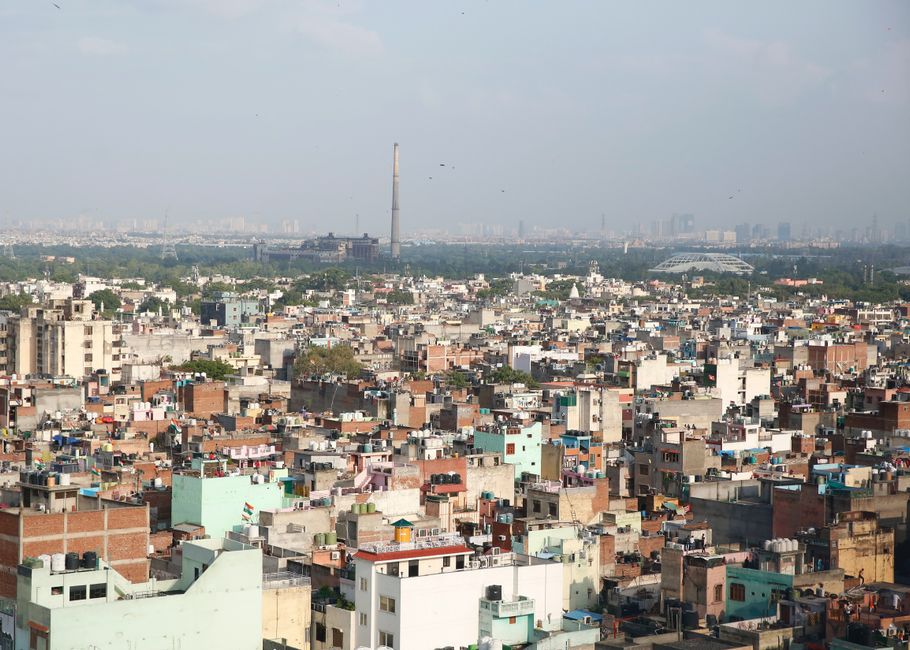
Delhi's property landscape is undergoing a seismic shift. With the Purple Line extension reaching into East Delhi and Phase-IV Metro corridors connecting previously isolated pockets, first-time buyers are witnessing a rare convergence of infrastructure development and financial incentives that hasn't been seen in nearly a decade.
Consider the transformation underway in areas like Janakpuri and Dwarka, where new DLF commercial-residential clusters are emerging. Average prices in these zones have climbed from INR 6,500 per square foot three years ago to approximately INR 8,200 today—still below the INR 12,000-15,000 baseline in South Delhi's established neighbourhoods like Defence Colony and Vasant Kunj, yet commanding premium pricing due to connectivity. For first-time buyers, this creates a window: grab emerging localities before valuations spike further, or wait for peripheral NCR markets like Gurgaon's Sector 79 and Noida's Sector 150, where INR 5,500-6,800 per sqft remains accessible.
The financial toolkit has expanded. While Pradhan Mantri Awas Yojana continues offering subsidised interest rates—up to INR 9 lakh for eligible EWS and LIG categories—newer state-level schemes through the Delhi Housing Board now facilitate first-time buyer grants up to INR 3 lakh. Banks, recognising the infrastructure boom, have relaxed loan-to-value ratios from 85% to 90% for properties within 2km of Metro stations, effectively reducing required down payments to 10%.
However, timing matters. New development projects typically show price appreciation of 12-18% annually during construction phases. A property purchased in Sector 62, Noida—adjacent to the planned Delhi-Meerut Rapid Rail corridor—could yield significant returns within five years as connectivity finalises. Conversely, buyers in established areas like Greater Kailash or Hauz Khas face slower appreciation but immediate livability and community maturity.
The hidden consideration lies in ancillary costs. New projects often bundle infrastructure charges, maintenance levies, and registration fees into price tags, sometimes inflating the true cost by 15-20%. Established neighbourhoods, despite higher base prices, occasionally offer clearer financial transparency.
First-time buyers should cross-verify eligibility for Credit Linked Subsidy Scheme (CLSS) benefits, scrutinise developer credibility via RERA filings, and factor in 18-24 months of construction timelines. Consulting financial advisors familiar with Delhi's micro-market variations—particularly along the Rajiv Chowk to Kasturba Nagar corridor, where micro-apartments under INR 50 lakh are proliferating—remains essential before committing.
The window for strategic entry exists now. But informed navigation of grants, project viability, and locality fundamentals separates wise investments from costly missteps.
This article was compiled by AI from the sources linked above and screened before publishing. See our editorial standards.