What Delhi's Auction Data Is Really Telling Us About Affordable Housing
Falling clearance rates and rising reserve prices signal a market disconnect that threatens the city's social housing ambitions.
Falling clearance rates and rising reserve prices signal a market disconnect that threatens the city's social housing ambitions.
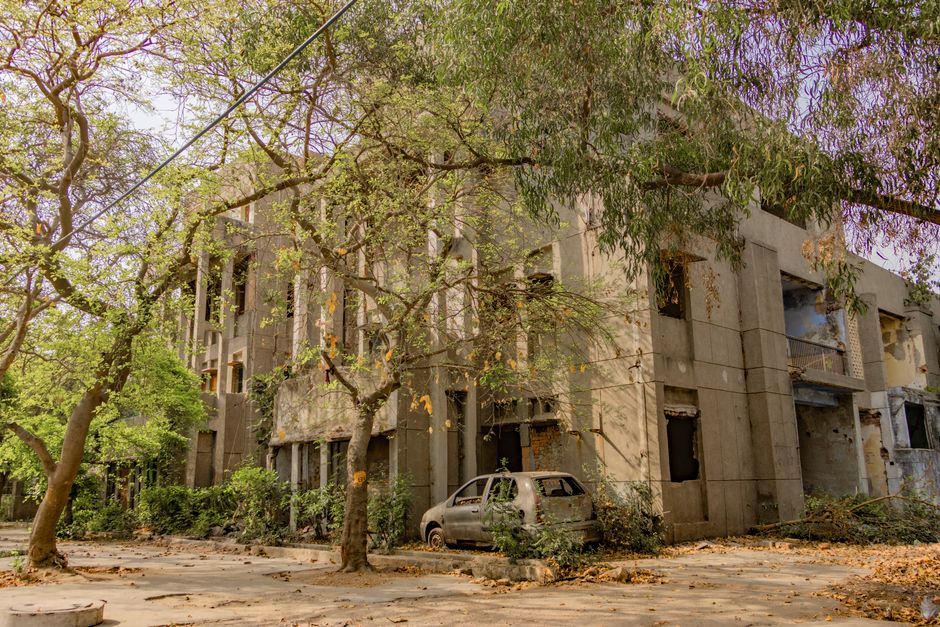
Delhi's affordable housing market is sending out conflicting signals, and the numbers are impossible to ignore. Recent auction results across DMRC-linked properties, PWD land parcels, and DDA housing schemes reveal a widening gap between government expectations and ground reality—one that policymakers can no longer afford to overlook.
The data points are stark. Auction clearance rates for affordable units have dipped below 40% in recent months, according to property registrations tracked across Delhi's circles. Meanwhile, reserve prices for two-bedroom units in schemes targeting middle-income groups have climbed to ₹55–65 lakh in outer zones like Rohini and Greater Kailash Extension, pushing them beyond the affordability threshold for which they were designed. By comparison, the city's average property price hovers around ₹8,000 per square foot—but affordable units are being priced closer to ₹12,000–14,000 per sqft when calculated against actual reserve values.
What's happening? Several auction cycles show buyers backing away when prices breach psychological barriers. A DDA housing lottery in Dwarka last quarter saw fewer than half the eligible applicants bid, despite heavy promotion. Similarly, properties in the Pradhan Mantri Awas Yojana pipeline across East Delhi neighbourhoods remain oversupplied relative to demand at listed rates.
The signal is unmistakable: government agencies are mispricing these units. Land acquisition costs, construction inflation, and GST have driven reserve prices upward, but wage growth in Delhi's target demographic—teachers, junior civil servants, small traders—has not kept pace. A family earning ₹5–7 lakh annually cannot comfortably service a ₹55-lakh mortgage, no matter how attractive the tenure terms.
This matters beyond housing statistics. Delhi's affordable housing shortfall stands at roughly 1.5 million units. Every failed auction represents not just a missed revenue opportunity for the state, but a family remaining trapped in irregular settlements or overcrowded rental housing. The metro corridor uplift that benefits Gurgaon and Noida property owners has largely bypassed Delhi's low-income residents.
Some recent policy moves suggest acknowledgment of the problem. The Delhi government's revised guidelines for affordable housing projects in new commercial zones indicate lower rate expectations. Yet auctions continue at old price points, suggesting implementation lag.
The remedy requires pricing discipline. Agencies must align reserve prices with genuine affordability metrics—not construction costs plus markup, but what the intended buyer can actually afford. Faster clearances at lower prices generate quicker capital recovery and repeat revenue cycles. Holding out for maximum returns per transaction merely guarantees inventory rot and policy failure.
The auction results are speaking clearly. The question is whether Delhi's housing administrators are listening.
This article was compiled by AI from the sources linked above and screened before publishing. See our editorial standards.
How does this story make you feel?
Spread the word
About this article
Published by The Daily Delhi
Daily brief
Free, in your inbox before 7am. Weekdays.
More in Property