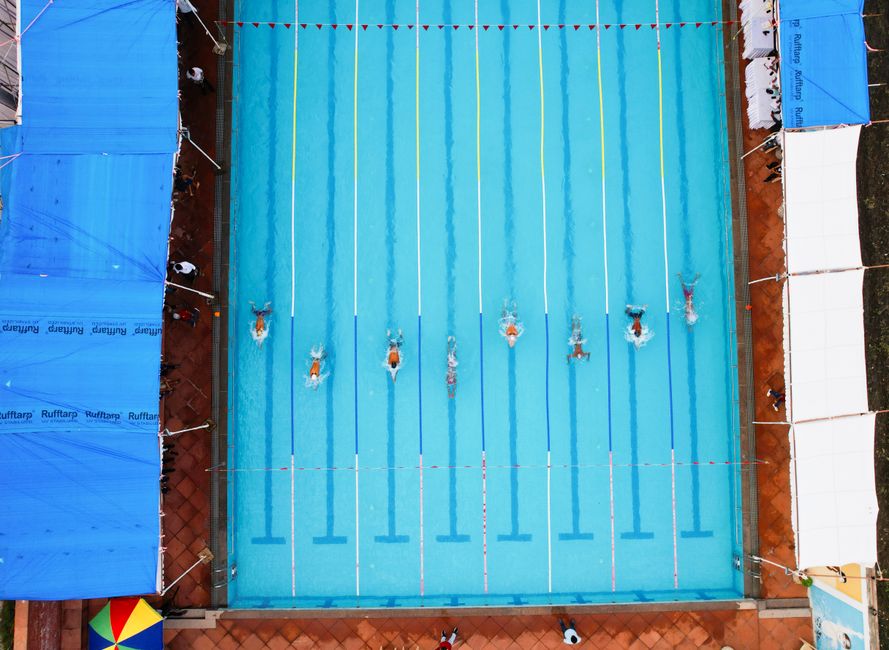
Delhi's swimming pools tell a story the city's fitness enthusiasts are only beginning to understand. Recent participation surveys across the National Capital Region reveal that water sports and aquatic activities have seen a 34% increase in membership over the past three years, a surge that challenges assumptions about how Delhi residents prioritize their health.
The trend is most visible in south Delhi's established aquatic hubs. Facilities around East Delhi's Yamuna Sports Complex and the DDA-managed pools in Defence Colony, Kasturba Nagar, and Siri Fort have reported waiting lists reaching three to four months during peak seasons. Membership fees, which ranged from ₹8,000 to ₹15,000 annually a decade ago, now command ₹18,000 to ₹35,000 depending on facilities and coaching availability.
What's particularly revealing is the demographic shift. Rather than the traditional stronghold of competitive swimmers and water polo enthusiasts, participation data shows a 42% rise among working professionals aged 25-45 and a 28% increase in family memberships. Private aquatic centers in Gurgaon and Greater Noida extensions have capitalized on this trend, but Delhi's municipal infrastructure remains the primary driver of accessibility across income groups.
"Water aerobics and recreational swimming now account for nearly 60% of daily pool usage," says the emerging picture from facility administrators across multiple centers. This mirrors broader fitness patterns: Delhi's fitness culture, once dominated by gymnasium memberships, is diversifying. Water sports offer lower impact alternatives attractive to the city's aging population while maintaining appeal for younger enthusiasts seeking novelty beyond treadmills and dumbbells.
The participation data also exposes infrastructure gaps. While south Delhi pools operate at 85-95% capacity, north Delhi locations like the pool near GTB Nagar station operate at just 52% utilization. This geographical disparity suggests affordability and accessibility remain barriers; travel time to south Delhi facilities makes them impractical for many north Delhi residents despite comparable fees.
Interestingly, coaching certification courses and lifeguard training have seen proportional growth. The Delhi Swimming Association and DDA's accredited centers report 156 new coaching certifications last year, up from 89 in 2023, indicating the sector's professionalization.
As Delhi continues its rapid urbanization, the swimming pool phenomenon offers a window into how the city's middle class is redefining fitness priorities. The data suggests water sports aren't a passing trend but rather a structural shift toward activities perceived as sustainable, sociable, and less physically demanding than traditional gym culture. For city planners, the message is clear: aquatic infrastructure investment will define Delhi's fitness landscape for the next decade.
This article was compiled by AI from the sources linked above and screened before publishing. See our editorial standards.