Delhi's Office Market Shifts Gears: What Businesses Need to Know Right Now
Rising demand in peripheral zones and hybrid work realities are reshaping where companies set up shop in the capital.
Rising demand in peripheral zones and hybrid work realities are reshaping where companies set up shop in the capital.
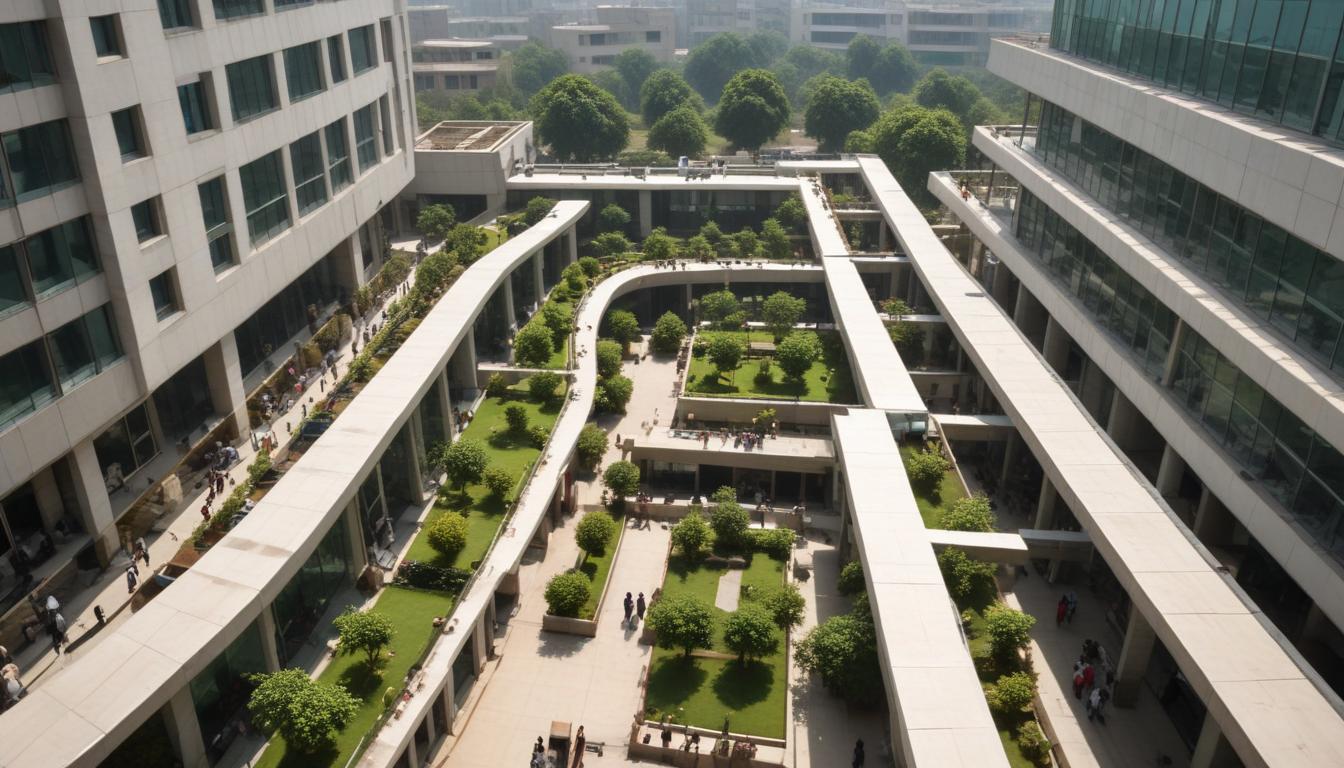
Delhi's commercial real estate market is undergoing a significant recalibration. After years of concentration in traditional CBD strongholds like Connaught Place and the Bandra-equivalent of Gurgaon's MG Road corridor, businesses are discovering opportunity—and affordability—in emerging micro-markets across the National Capital Region.
The past 18 months have seen sustained demand for office space in secondary locations. Noida's Sector 62 and Greater Noida West have emerged as serious contenders, with rental rates hovering around ₹45-55 per square foot monthly, compared to ₹80-120 in prime Central Delhi zones. For mid-market companies and startups, the arithmetic is compelling: premium infrastructure at a fraction of the cost.
But it's not just about price. The hybrid work revolution has permanently altered occupancy patterns. Companies that previously locked in 100,000 sq ft leases for 500 employees are now rethinking their footprint. Many are consolidating to 60,000-70,000 sq ft, banking on rotating schedules and hot-desking arrangements. This has created a peculiar supply-demand tension: oversupply in large, trophy floors, and genuine scarcity for well-designed, flexible 15,000-30,000 sq ft units.
Real estate experts tracking the Delhi market report that committed absorption in the first quarter of 2026 reached approximately 1.2 million square feet—solid, but slower than pre-pandemic growth rates. The weighted average rental growth remains modest, around 3-4% year-on-year, signalling a landlord's market that favours tenants willing to negotiate. Landlords offering turnkey solutions, furnished spaces, and flexible lease terms are capturing deals faster than those demanding long-term commitments.
The regulatory environment matters too. The Delhi government's recent push to streamline building approvals and simplify compliance has marginally reduced project timelines, though bureaucratic friction remains. Meanwhile, the NCRPB's infrastructure push—particularly Metro expansion and highway improvements—is slowly bridging the accessibility gap between peripheral zones and the city core.
For businesses planning expansion or relocation, the current moment favours strategic timing. Rental correction in trophy segments may continue through 2026-27, while peripheral markets are likely to see steady appreciation. Flexibility—in lease terms, office design, and location—has become a competitive advantage. Companies that can embrace hybrid models and secondary locations are securing better deals and hedging against long-term real estate volatility.
The Delhi office market is no longer one market. It's a archipelago of distinct micro-economies, each with different cost-benefit equations. Smart businesses are mapping these carefully.
This article was compiled by AI from the sources linked above and screened before publishing. See our editorial standards.
How does this story make you feel?
Spread the word
About this article
Published by The Daily Delhi
Daily brief
Free, in your inbox before 7am. Weekdays.
More in Business