Global Tensions Reshape Delhi's Job Market as Companies Reassess Supply Chains
Geopolitical uncertainty and trade disruptions are forcing Delhi's IT, manufacturing, and logistics sectors to hire differently—and faster.
Geopolitical uncertainty and trade disruptions are forcing Delhi's IT, manufacturing, and logistics sectors to hire differently—and faster.
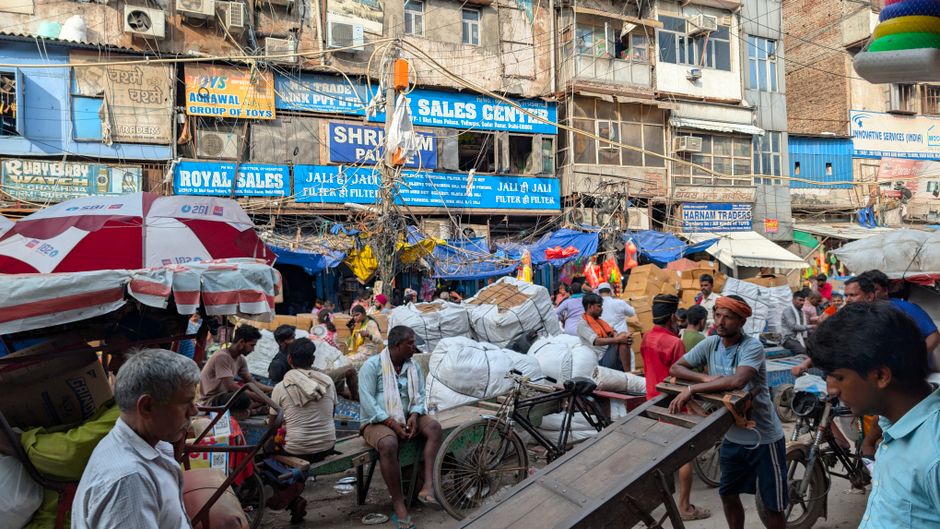
Walking through the gleaming office parks of Gurugram and the bustling commercial hubs around Connaught Place, it's easy to miss how profoundly global instability is reshaping Delhi's employment landscape. Yet recruiters, business leaders, and HR professionals say the seismic shifts in international relations—from Middle Eastern tensions to African trade disruptions—are forcing local companies to urgently rethink their hiring strategies and workforce composition.
The impact is most visible in sectors dependent on global supply chains. Manufacturing units in Okhla Industrial Estate and Narela are scrambling to diversify sourcing arrangements away from regions experiencing political volatility. This has triggered unexpected demand for supply chain specialists, logistics coordinators, and regional trade compliance officers. Recruitment agencies report a 23% spike in these roles compared to last year, with salaries for senior positions climbing to ₹15-18 lakh annually—a significant jump from the ₹12-14 lakh range in 2024.
India's IT sector, which accounts for a substantial portion of Delhi-NCR employment, faces a different challenge. With U.S.-Iran tensions potentially affecting technology partnerships and trade policies, companies are accelerating hiring of employees capable of navigating geopolitical risk assessment and international regulatory compliance. Major IT firms with offices in the business districts of New Delhi and Noida are competing fiercely for talent versed in cybersecurity and data localization—skills that command premiums of 25-30% above standard rates.
The uncertainty has also created opportunities in adjacent fields. Business continuity planning, crisis management, and scenario analysis roles have multiplied across sectors. Meanwhile, the disruption in African supply chains has unexpectedly benefited Delhi-based companies offering alternative logistics solutions, driving hiring in consulting and analytics.
Not all employment news is positive, however. Companies exporting to volatile regions are exercising caution. Several mid-sized exporters in the leather goods and textile sectors—traditionally strong employers along the streets near Chandni Chowk—have frozen expansion plans. A handful have shifted focus toward domestic-market servicing, reducing their need for international business development roles.
What's clear is that Delhi's job market has become more volatile and less predictable. Workers with flexibility, international experience, and crisis-management capabilities are most in demand. For job seekers in traditional sectors, the message is stark: upskilling is no longer optional. The city's employment health, once driven largely by domestic growth and outsourcing trends, now moves in tandem with global headlines—for better and worse.
This article was compiled by AI from the sources linked above and screened before publishing. See our editorial standards.
How does this story make you feel?
Spread the word
About this article
Published by The Daily Delhi
Daily brief
Free, in your inbox before 7am. Weekdays.
More in Business