How geopolitical tensions in the Middle East are reshaping Delhi's export economy
As US-Iran talks intensify and regional instability spreads, small business owners in Delhi's wholesale markets are bracing for shipping delays and rising costs.
As US-Iran talks intensify and regional instability spreads, small business owners in Delhi's wholesale markets are bracing for shipping delays and rising costs.
Rajesh Sharma, who runs a textile export business from a cramped office in Okhla Industrial Area Phase II, has stopped sleeping well. Not because of personal worry, but because of a spreadsheet: the one tracking his shipment schedules to the Middle East, where escalating tensions between the United States and Iran have made maritime routes increasingly unpredictable.
"Three weeks ago, I could guarantee delivery to Dubai in 12 days," Sharma explained during a recent visit to his warehouse. "Today, shipping lines are adding 15-20 days as a buffer, routing around the Strait of Hormuz. My clients are frustrated. My margins are collapsing."
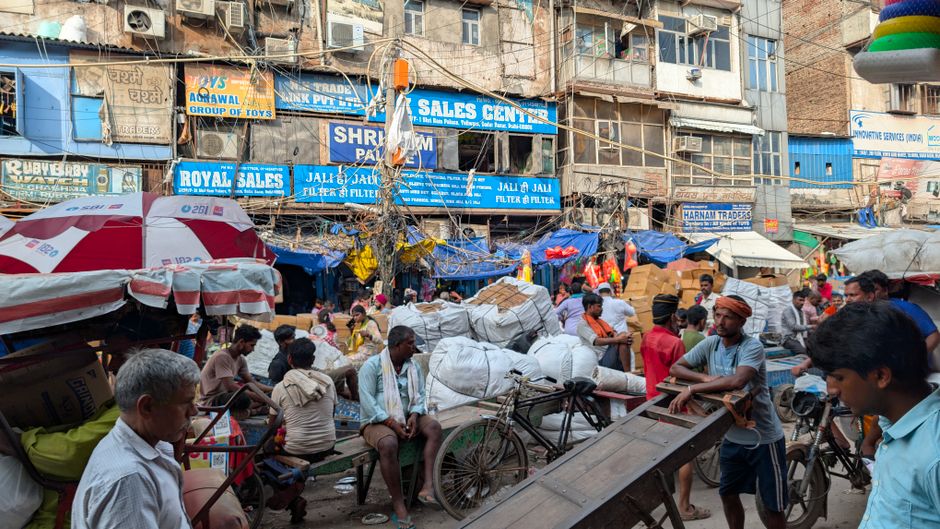
Sharma's predicament is emblematic of a broader vulnerability gripping Delhi's small business ecosystem. The city's wholesale markets—from the fabric traders of Chandni Chowk to the pharmaceutical suppliers clustered around Kirti Nagar—have historically thrived on predictable global supply chains. Today, that predictability is fracturing.
Data from the Delhi Chamber of Commerce and Industry suggests that 34% of the city's small and medium exporters rely on Middle Eastern markets for at least 40% of their annual revenue. With geopolitical flashpoints multiplying—Iran's recent strategic posturing over shipping lanes, Pakistan-Afghanistan cross-border tensions affecting transit routes, and broader US foreign policy shifts—businesses here are scrambling to adapt.
Priya Malhotra, who manages a spice export operation from Bhagirath Palace, has begun diversifying supplier bases and exploring Southeast Asian markets. "It's not ideal," she said. "Southeast Asia has different regulations, different buyers. But I cannot rely on Middle Eastern stability anymore."
The inflation is already visible. Freight costs to Gulf countries have risen 18-22% since March, according to shipping brokers operating from the Vikram Vihar logistics hub. Insurance premiums for goods transiting high-risk zones have doubled. Small operators, unable to absorb these costs, are either passing them to already price-sensitive buyers or accepting lower margins.
The uncertainty extends beyond logistics. Currency volatility—particularly the Iranian rial's weakness and fluctuating Gulf exchange rates—makes pricing exports a guessing game. Businesses are increasingly hedging through banking partners, adding another cost layer.
Yet amid the turbulence, some Delhi entrepreneurs see opportunity. Several are exploring nearshoring—setting up smaller assembly or packaging operations closer to final markets. Others are investing in digital supply chain management tools to navigate complexity.
As Sharma puts it: "We cannot control global politics. But we can control how intelligent we are about it." For Delhi's business community, that intelligence may soon determine survival.
This article was compiled by AI from the sources linked above and screened before publishing. See our editorial standards.
How does this story make you feel?
Spread the word
About this article
Published by The Daily Delhi
Daily brief
Free, in your inbox before 7am. Weekdays.
More in Business