Delhi's Job Market Signals Diverge as Capital Inflows Reshape Employment Landscape
New investment patterns and sectoral shifts offer clues to where Delhi's next employment surge will come from—and which workers face disruption.
New investment patterns and sectoral shifts offer clues to where Delhi's next employment surge will come from—and which workers face disruption.
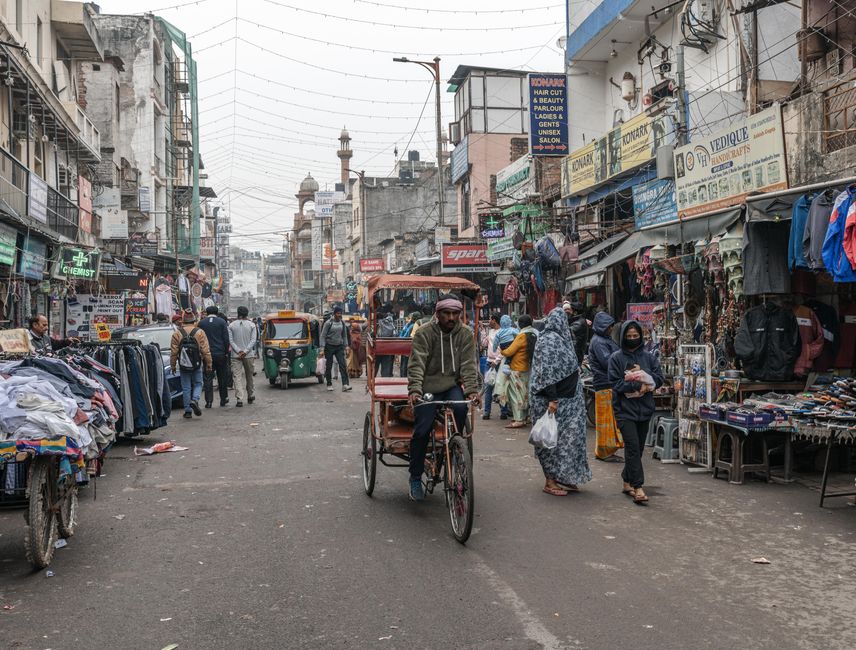
Delhi's labour market is sending mixed signals as foreign direct investment reshapes the city's employment geography. While overall job creation has slowed to 2.3 percent year-on-year growth according to recent labour ministry data, capital flows into specific sectors suggest pockets of expansion ahead.
Tech hubs in Gurugram and the emerging startup corridor along Delhi's Cyber City have attracted $4.2 billion in venture capital so far this fiscal year, a 31 percent jump from 2025. This concentration reflects a broader shift: venture-backed firms are hiring aggressively for software engineers, product managers, and data scientists, with starting salaries reaching ₹18-22 lakh annually—well above the Delhi average of ₹12 lakh across all sectors.
Yet traditional employment engines are cooling. Real estate and construction—long Delhi's labour-intensive backbone—saw investment inflows decline 15 percent after the RBI's infrastructure finance tightening in March. This affects not just white-collar project managers, but also skilled workers across South Delhi's construction zones and NOIDA's sprawling residential projects.
Financial services tell another story. Insurance, banking, and fintech firms clustered in Connaught Place and the business districts of Nehru Place are hiring compliance officers, risk analysts, and backend operations staff, with entry-level positions available at ₹9-11 lakh. Government data shows financial services employment grew 4.1 percent this quarter—outpacing overall growth and reflecting both domestic expansion and multinational regional headquarters shifting operations to Delhi.
Manufacturing's trajectory remains weak. Despite Make in India incentives, industrial estates in Wazirpur and Bawana continue shedding workforce as companies chase cheaper labour in Gujarat and Rajasthan. Employment in this sector contracted 1.8 percent annually.
Hospitality and tourism employment jumped 8.7 percent following international visitor arrivals recovering to pre-pandemic levels, though wages remain compressed at ₹6-8 lakh for mid-level staff.
What does this mean for job seekers? Workers with coding skills face multiple offers; construction labourers face tightened opportunities; and mid-career professionals in finance and insurance find doors opening. The investment flows are real—they're just not distributed evenly across Delhi's diverse economy.
As capital continues flowing toward tech, finance, and services, workers in declining sectors like manufacturing face retraining pressures. For policymakers, the challenge is clear: growth is happening, but it's increasingly concentrated in knowledge work and services rather than the broad-based employment creation the city once provided.
This article was compiled by AI from the sources linked above and screened before publishing. See our editorial standards.
How does this story make you feel?
Spread the word
About this article
Published by The Daily Delhi
Daily brief
Free, in your inbox before 7am. Weekdays.
More in Business