Delhi's Small Businesses Face a Shifting Market: Here's What You Need to Know Right Now
Rising operational costs and changing consumer behaviour are forcing entrepreneurs across the capital to rethink their strategies mid-year.
Rising operational costs and changing consumer behaviour are forcing entrepreneurs across the capital to rethink their strategies mid-year.
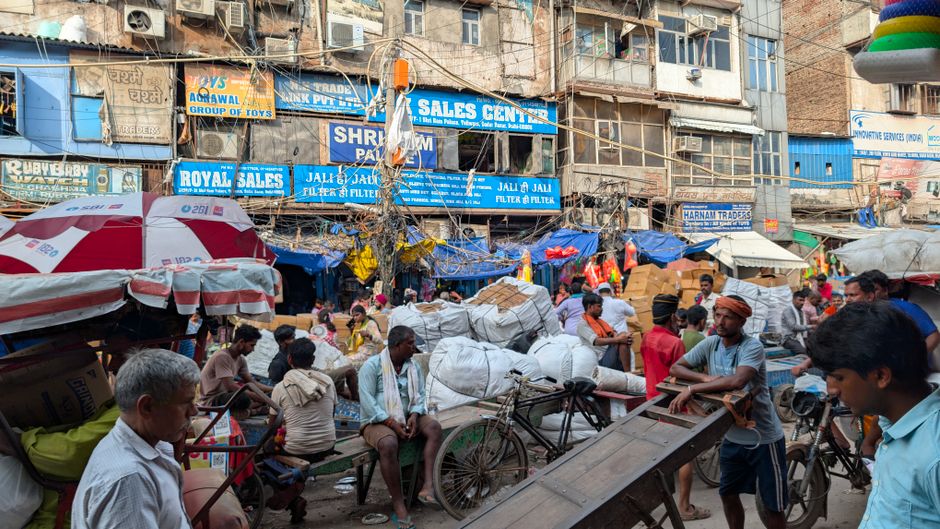
As we cross the halfway mark of 2026, Delhi's small business community is navigating a landscape of significant headwinds and unexpected opportunities. From the bustling wholesale markets of Chandni Chowk to the retail strips of Hauz Khas and Saket, entrepreneurs are grappling with inflationary pressures, shifting consumer preferences, and the growing challenge of competing with e-commerce platforms.
Commercial rent across prime Delhi locations has climbed roughly 12-15% year-on-year, according to informal surveys among business associations. A modest 400-square-foot retail space in Connaught Place now commands ₹150,000-200,000 monthly, while secondary markets like Greater Kailash and Defence Colony have seen proportional increases. For F&B operators particularly, this squeeze is acute: many are reporting that food costs have risen between 18-22% since January, driven by agricultural commodity inflation and supply chain disruptions.
Yet the picture is not uniformly grim. Consumer spending patterns reveal intriguing shifts. Micro-entrepreneurs in the wellness and home services sector—personal training, organic grocery delivery, home cleaning franchises—are seeing sustained double-digit growth. Similarly, businesses offering digital solutions to other small enterprises are thriving. A network of IT support and accounting firms operating from business centres around Cyber City report steady client acquisition.
The data tells a story of bifurcation. Traditional retail in older markets faces margin compression, with many shop owners reporting 5-8% lower profitability despite stable sales volumes. Meanwhile, service-based and tech-enabled businesses are pulling ahead. Logistics aggregators and last-mile delivery startups, capitalising on the city's chaotic traffic patterns, continue to attract both customers and investor interest.
For entrepreneurs looking ahead, diversification appears critical. Several successful store owners in Lajpat Nagar and Karol Bagh have begun supplementing foot traffic with online channels, even as they resist full e-commerce dependence. Others are exploring pop-up models and event-based selling to reduce fixed costs.
Industry bodies like the Delhi Chambers of Commerce and Industry are advocating for rate relief on commercial properties and simplified GST compliance for micro-enterprises. Pending policy movement, business owners should expect to operate on tighter margins for the remainder of 2026.
The message for Delhi's entrepreneurs is clear: adaptability, not scale, is the competitive advantage this cycle. Those willing to pivot their cost structures and explore hybrid sales models are likely to weather the current churn.
This article was compiled by AI from the sources linked above and screened before publishing. See our editorial standards.
How does this story make you feel?
Spread the word
About this article
Published by The Daily Delhi
Daily brief
Free, in your inbox before 7am. Weekdays.
More in Business