Delhi's Economic Pulse: What Rising Interest Rates and ...
As capital flows shift and inflation concerns persist, understanding key economic indicators becomes essential for investors and residents navigating Delhi's changing financial landscape.
As capital flows shift and inflation concerns persist, understanding key economic indicators becomes essential for investors and residents navigating Delhi's changing financial landscape.
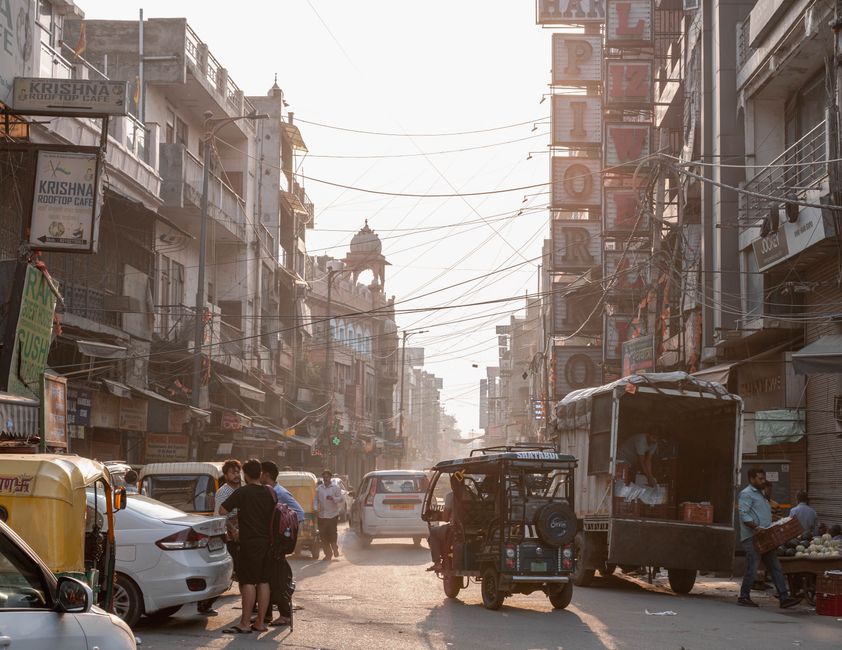
Delhi's business district along Rajiv Chowk and Connaught Place has been buzzing with activity this quarter, but beneath the surface, several economic indicators are reshaping how money moves through the capital. For investors and residents alike, decoding these signals has become crucial to understanding cost pressures and wealth-building opportunities.
Foreign Direct Investment (FDI) into India has shown resilience, with Delhi attracting significant inflows toward tech startups and financial services firms. Yet this capital concentration tells a story: while Gurugram's glittering corridors see billions flowing in, middle-class Delhiites in South Delhi neighbourhoods and East Delhi are feeling the pinch differently. Retail inflation, hovering around 5-5.5 percent annually, has made everyday items costlier. A kilogram of tomatoes at INA Market or Rajendra Place vegetable stands reflects these pressures acutely.
The Reserve Bank of India's monetary policy stance—maintaining elevated interest rates to combat inflation—has dual effects. Homebuyers in localities like Greater Noida and Dwarka face stiffer EMI obligations as mortgage rates remain above 8.5 percent. Simultaneously, fixed deposits and savings accounts offer marginally better returns than recent years, providing relief to retirees and conservative savers across South Extension and Defence Colony.
Investment flows tell another crucial tale. Domestic retail investors have increasingly rotated toward equities and mutual funds, driven partly by underwhelming fixed-deposit returns. The Bombay Stock Exchange and NSE offices near Dalal Street have seen steady foot traffic. Meanwhile, real estate investment in Delhi's periphery—Noida, Greater Noida, and Ghaziabad—continues attracting first-time homebuyers despite elevated prices, suggesting aspirational mobility remains strong.
What explains these flows? Several factors converge. Corporate earnings growth in IT and financial services sectors—Delhi's economic engines—remains steady at 8-10 percent. This supports equity markets. However, rising input costs and wage inflation are squeezing margins in manufacturing and logistics hubs around Okhla and Narela.
For the average Delhi resident, these economic indicators translate into tangible concerns. Educational expenses at institutions across Delhi University and Delhi NCR have climbed 12-15 percent annually. Healthcare costs at major hospitals in Safdarjung and Fortis outlets have similarly escalated. Meanwhile, rental yields in prime localities like Vasant Kunj have compressed, making property investment less attractive for income-seeking investors.
The broader picture: Delhi's economy is bifurcated. High-value services sectors attract capital and wage growth, while traditional consumption and real estate face headwinds. Understanding these flows—where money enters, where it gets stuck, and why—helps residents make informed financial decisions in an increasingly complex economic environment.
This article was compiled by AI from the sources linked above and screened before publishing. See our editorial standards.
How does this story make you feel?
Spread the word
About this article
Published by The Daily Delhi
Daily brief
Free, in your inbox before 7am. Weekdays.
More in Business