Delhi's environmental crisis—from hazardous winter smog blanketing Connaught Place to depleting groundwater reserves across South Delhi—has prompted an unusually coordinated response from government bodies and independent experts, who this month revealed competing but complementary visions for the capital's sustainable future.
Municipal officials overseeing the Delhi Development Authority's new master plan emphasize green infrastructure as central to their strategy. Speaking at a sustainability roundtable in mid-June, municipal commissioners highlighted plans to convert 2,000 hectares of degraded land into urban forests, with particular focus on the Yamuna floodplain and the Najafgarh Drain corridor. The push includes restoring wetlands that officials say once filtered the city's water naturally—a capacity lost as Delhi expanded from 5.2 million residents in 1991 to nearly 33 million today.
Environmental consultants tracking Delhi's air quality metrics note cautious optimism. While PM2.5 levels still regularly exceed WHO safe thresholds—averaging 87 micrograms per cubic meter during winter months—experts credit targeted interventions around industrial zones in Narela and Okhla for preventing wider deterioration. "The question now," according to research institutions studying the capital's pollution dynamics, "is whether these local improvements can scale citywide."
Water scarcity remains more intractable. Delhi's groundwater table has fallen approximately 0.6 meters annually in peripheral areas like Dwarka and Faridabad-adjacent neighborhoods, prompting officials to accelerate building-level rainwater harvesting mandates. Experts argue the city's 2.7 trillion liters of annual water demand cannot be met through supply-side fixes alone, requiring behavior change that implementation authorities acknowledge remains culturally challenging.
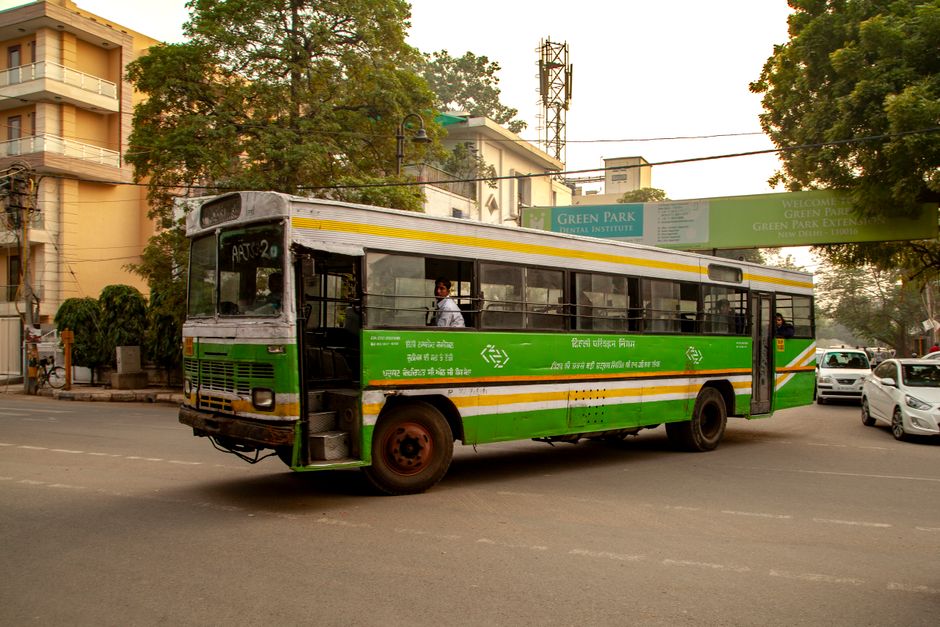
Transport decarbonization offers more decisive progress. The expansion of Delhi Metro's network to 436 kilometers by 2030—extending deep into outer regions like Rohini and Vikas Puri—represents Delhi's largest carbon reduction investment. Environmental analysts estimate the metro's completion will displace 800 million annual car journeys, reducing transport sector emissions by approximately 18 percent.
However, disagreement persists between municipal authorities and independent researchers regarding enforcement timelines. While officials project meeting national 2030 climate targets through existing initiatives, environmental groups contend that absent accelerated industrial regulation and stricter vehicle emission standards, Delhi risks missing these goals.
The conversation has gained urgency as surrounding regions face environmental emergencies—catastrophic flooding in neighboring areas, crop-burning practices affecting air quality—that make isolated Delhi-level action insufficient. Officials and experts alike now stress the need for regional coordination, particularly with Haryana and Uttar Pradesh governments, to address the interconnected ecological systems sustaining the National Capital Region.
This article was compiled by AI from the sources linked above and screened before publishing. See our editorial standards.