Delhi's Green Push by Numbers: What the Data Really Shows About Our Sustainability Drive
As the capital embarks on ambitious environmental targets, new figures reveal the scale of Delhi's challenge—and how far officials claim we've come.
As the capital embarks on ambitious environmental targets, new figures reveal the scale of Delhi's challenge—and how far officials claim we've come.
Delhi's air quality crisis has long dominated headlines, but a deeper look at the numbers underpinning the city's sustainability initiatives reveals a more complicated picture than headline improvements suggest.
The Delhi Pollution Control Committee released data in April showing that the number of days exceeding hazardous air quality standards (AQI above 400) dropped from 89 days in 2021 to 34 days in 2025—a 62 percent reduction. Yet particulate matter (PM 2.5) concentrations in central Delhi localities like Connaught Place still averaged 67 micrograms per cubic metre in the first quarter of 2026, nearly three times the WHO guideline of 15 micrograms. By comparison, London's average hovers around 12 micrograms.
Water conservation initiatives tell a similarly mixed story. The Delhi Jal Board's 2025-26 annual report indicates that the city's per capita water consumption stands at 218 litres daily—down from 245 litres in 2019, according to official statistics. However, non-revenue water loss (leakage and theft) remains at approximately 48 percent citywide, with East Delhi zones recording losses exceeding 55 percent. The board aims to reduce this figure to 20 percent by 2030, a goal experts describe as ambitious but unproven at scale.
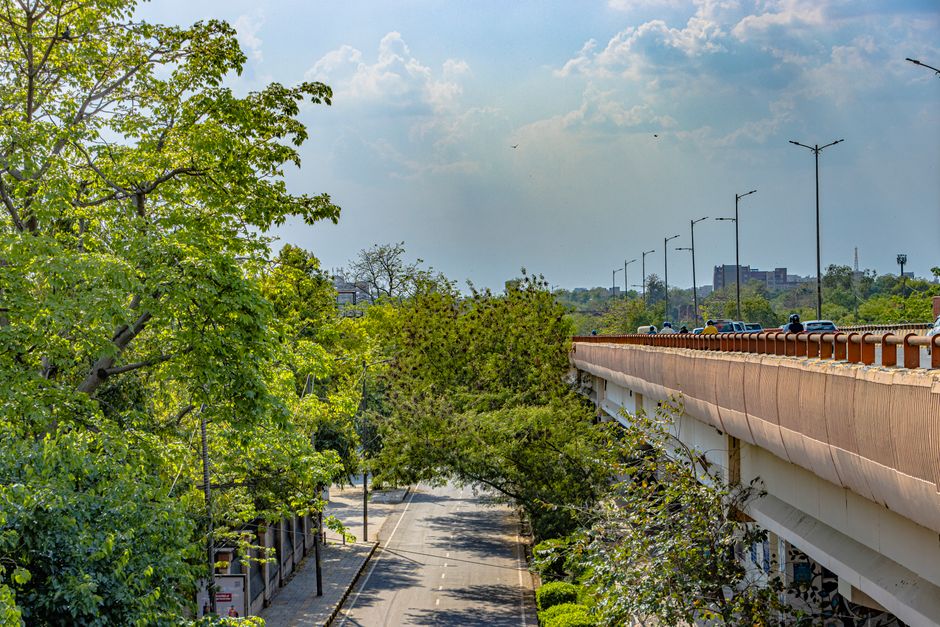
Green space expansion presents perhaps the most tangible metric. Delhi's forest and green cover increased by 3,247 hectares between 2019 and 2025, primarily through afforestation efforts in South Delhi's Aravalli Buffer Zone and the Delhi Ridge. However, the city's total green cover remains just 20.3 percent of its 1,484 square kilometre area—far below the WHO recommendation of 9 square metres of green space per capita. The Ridge Forest alone encompasses 6,575 hectares but faces degradation pressures.
Solar adoption figures showcase more optimistic trends. Rooftop solar installations across Delhi surged from 12,847 units in 2021 to 47,329 by May 2026, with a combined capacity of 238 megawatts. The Delhi Electricity Regulatory Commission projects solar will comprise 8 percent of the city's power mix by 2030, up from 2.1 percent currently.
The numbers reveal Delhi's environmental trajectory: measurable progress in specific sectors alongside persistent structural challenges. Whether these gains represent genuine systemic change or incremental adjustments within an unsustainable framework remains contested among environmental researchers. What's undeniable is that sustainability in Delhi increasingly demands literacy in data interpretation—understanding not just what improved, but by how much, and against what baseline.
This article was compiled by AI from the sources linked above and screened before publishing. See our editorial standards.
How does this story make you feel?
Spread the word
About this article
Published by The Daily Delhi
Daily brief
Free, in your inbox before 7am. Weekdays.
More in News