Build-to-Rent Boom in Delhi Offers Tenants a New Choice as Affordability Gap Widens
Developers pour money into purpose-built rental housing as traditional homebuying slips further out of reach for many Delhiites.
Developers pour money into purpose-built rental housing as traditional homebuying slips further out of reach for many Delhiites.

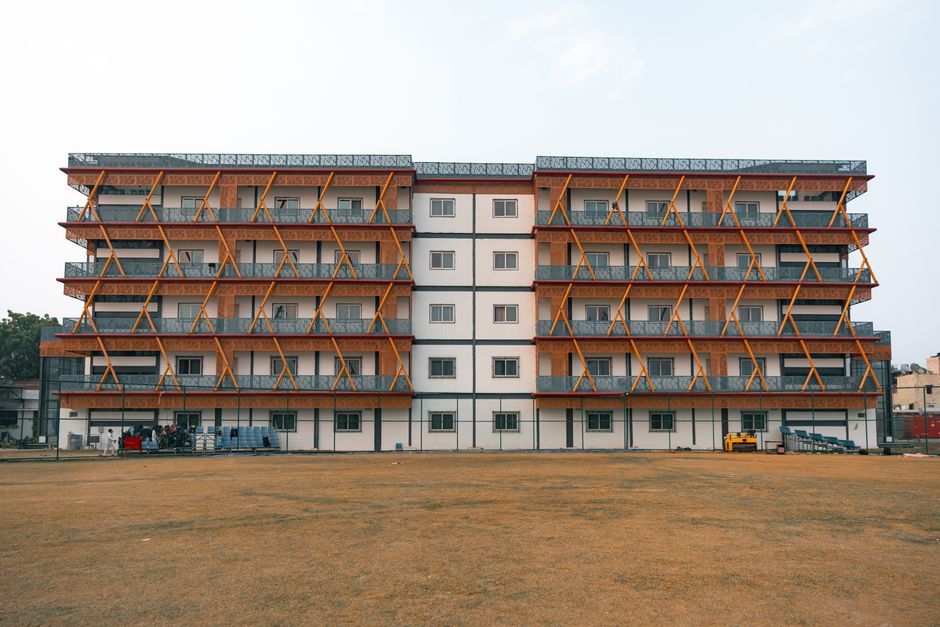
This spring, DLF launched its first purpose-built rental complex on Golf Course Extension Road, throwing a spotlight on a burgeoning build-to-rent market in the Delhi-NCR region. With monthly rents starting at ₹45,000 for a furnished two-bedroom, the new Riviera Residences promises perks that traditional landlords rarely provide—such as rooftop gyms, secure digital entry, co-working lounges and free maintenance. The project is already at 80% occupancy within two months of opening, a sign that renters are seeking out professionally managed alternatives at a time when homebuying has become more difficult for many residents.
The surge in Delhi’s build-to-rent (BTR) sector comes against a backdrop of soaring property prices and rising home loan rates, making ownership an ever more distant dream for middle-income households. Gurgaon's Central Park 3, recently pivoted 160 flats to long-term rental under a partnership with PadSplit India, citing occupier demand among younger professionals priced out of the purchase market. Karuna Singh, a broker in South Extension, pointed to a growing waitlist for apartments like the newly launched Silverline Living in Okhla, which offers stabilization clauses and rent-free periods.
"Families who once saved up for a down payment are now looking for security, convenience, and flexibility," said a senior executive at a local property consultancy. "Landlords in South Delhi still resist multi-year leases, but the BTR operators are filling that gap." Singh added that working renters can now see a professional leasing process—background checks, clear contracts, and responsive maintenance—rare in Delhi’s largely informal rental market.
South Delhi’s neighbourhoods such as Saket and Green Park remain among the city’s priciest, with average sales prices in Q2 2026 touching ₹20,500 per sq ft, according to Anarock Property Consultants. By contrast, rents in upscale BTR complexes are perceived as more predictable: at Godrej Nirvana in Sohna, for example, 3BHK flats lease at ₹52,000–₹58,000 per month, inclusive of club memberships and maintenance. Around the new Dwarka Expressway tech corridor, DLF is negotiating with investment funds for two more rental assets, each with over 300 units tailored for mid- to upper-middle income tenants.
The affordability gap is stark. Median monthly EMI for new homebuyers in NCR jumped to ₹67,000 in June 2026, survey data from Magicbricks shows. Average rents for equivalent units in modern BTR developments range from ₹32,000–₹65,000, depending on location and amenities. “For most tenants, locking in a five-year rent with no risk of surprise increases is the main attraction,” said a property manager with a major Noida realty group.
Demand is also being fuelled by employer tie-ups. Mindspace Business Parks recently inked a deal with TATA Realty to offer discounted BTR rents for new hires relocating to Noida, while co-living platform Stanza Living has expanded its footprint in Gurugram and Lajpat Nagar by converting aging commercial buildings into managed rental suites.
Analysts expect at least 6,000 new BTR units to hit Delhi-NCR by the end of 2027, driven both by domestic developers and foreign funds betting on rental yield potential. Analysts at Knight Frank caution tenants to read BTR leases carefully: amenities may be bundled, but annual rent escalation can vary—with some contracts specifying a set 7% hike. Local activists urge clearer citywide rules to protect renters beyond the luxury bracket, especially as BTR gains traction in East Delhi and Dwarka, where land costs are lower but existing rental quality remains inconsistent.
For renters keen to step up from informal arrangements, BTR offers a more predictable—and, for now, sometimes more affordable—path, especially for those wary of the commitment (and spiralling costs) of property ownership. Watch for upcoming launches in Aerocity and Vasant Kunj over the coming year, and compare both contract terms and amenities closely before signing on. As the BTR sector heats up, tenants finally have more choice—and a little more bargaining power—in deciding where and how to live in the capital.
How does this story make you feel?
Spread the word
About this article
Published by The Daily Delhi
Daily brief
Free, in your inbox before 7am. Weekdays.
More in Property