Delhi's Best Meditation Classes, Groups and Apps Worth Trying Right Now
From Lodi Garden's dawn sittings to Rs 200 drop-in studio sessions in Hauz Khas, the capital's mindfulness scene has quietly matured into something serious.
From Lodi Garden's dawn sittings to Rs 200 drop-in studio sessions in Hauz Khas, the capital's mindfulness scene has quietly matured into something serious.
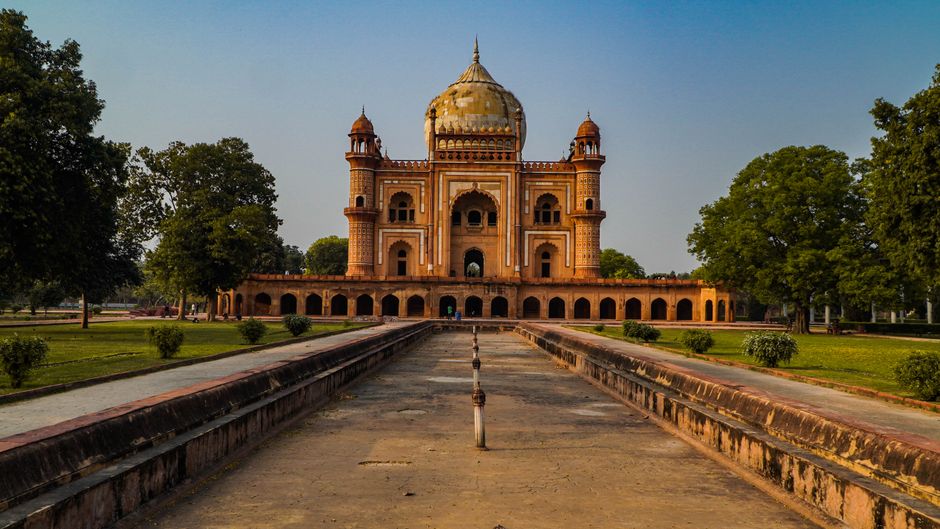
Delhi's parks fill up fast at 6 a.m. these days. Walk through Lodi Garden on any weekday morning and you'll find not just joggers but clusters of people sitting still — cross-legged on the grass near the Sheesh Gumbad, eyes closed, phones face-down beside them. The capital's meditation movement is no longer a niche hobby for retirees. It has broken into offices in Connaught Place, housing societies in Dwarka, and even the corridors of AIIMS, where the hospital's integrative medicine unit ran a structured eight-week Mindfulness-Based Stress Reduction programme for resident doctors in January 2026.
The timing matters. Delhi's air quality index routinely breaches 300 in winter, commutes average 90 minutes each way according to the 2025 Urban Mobility India report, and job-market uncertainty has pushed anxiety rates up sharply among 25-to-40-year-olds — the exact demographic now crowding into weekend meditation workshops. Global research published in JAMA Internal Medicine puts mindfulness-based interventions at roughly equivalent effectiveness to antidepressants for mild-to-moderate anxiety, which has given the practice a medical credibility it lacked a decade ago. For Delhi, a city that rarely slows down, that credibility has opened doors.
Nehru Park in Chanakyapuri remains the most accessible free option. The Delhi Vipassana Society holds a guided sit every Sunday at 7 a.m. near the park's northern entrance — no registration required, no fee, though first-timers are asked to arrive ten minutes early for a brief orientation. Vipassana, the technique popularised by S.N. Goenka and taught at the Dhamma Sota centre in Sonipat (roughly 45 km north of the city), stresses silent observation of breath and body sensation. The Sunday Nehru Park group is informal, but it draws regulars who have completed the ten-day residential course and want weekly continuity.
For something more structured, the Art of Living Foundation's South Delhi centre in Safdarjung Enclave offers the Sahaj Samadhi meditation course — four sessions spread over a week — for Rs 3,500. The centre also runs a free drop-in guided meditation every Tuesday evening at 6:30 p.m., which has become popular with professionals working out of the Saket and Greater Kailash corridors. Across town, the Brahma Kumaris' Pandav Bhawan centre in Parliament Street has offered free Raja Yoga meditation classes since the 1950s; their 7 a.m. batch is consistently oversubscribed, so walk-ins are advised to reach by 6:45.
Studio-based options have expanded too. Zorba the Buddha in Friends Colony — part café, part wellness space — runs a Tuesday-Thursday mindfulness drop-in priced at Rs 200 per session. Tattva Wellness Hub in Hauz Khas Village charges Rs 400 for a 45-minute guided session and offers a ten-class pass at Rs 3,000, which works out to Rs 300 a sitting. Both venues attract a younger crowd and mix breath-work with body-scan techniques drawn from Jon Kabat-Zinn's MBSR curriculum.
Not everyone has the schedule for in-person classes. Three apps stand out for Delhi users. Mindhouse, founded in Mumbai, has a Hindi-language meditation library that has grown to over 400 guided sessions as of June 2026; its annual subscription runs Rs 1,499, roughly a quarter of what international apps charge. Headspace and Calm remain popular but lack regional language depth. The newer entrant Wysa, which began as a mental health chatbot, added structured breath-work and mindfulness modules in late 2025 and offers a free tier substantial enough for beginners.
Anyone starting out would do well to try a free session first — the Nehru Park Sunday sit costs nothing and requires no booking — before committing to a course or app subscription. Those dealing with persistent anxiety, sleep disorders or chronic stress should consult a psychiatrist or psychologist at a facility like NIMHANS Delhi or a private mental health clinic before treating meditation as a standalone solution. The practice works best as part of a wider routine, not a replacement for professional advice. But as an entry point, an early morning in Lodi Garden with a group of strangers sitting quietly together is, by most accounts, a reasonable place to begin.
How does this story make you feel?
Spread the word
About this article
Published by The Daily Delhi
Daily brief
Free, in your inbox before 7am. Weekdays.
More in Wellness