Delhi's migrant workers face critical crossroads as policy window closes
As global migration pressures intensify, the capital must decide whether to formalize informal economies or tighten borders—and residents are caught between both futures.
As global migration pressures intensify, the capital must decide whether to formalize informal economies or tighten borders—and residents are caught between both futures.
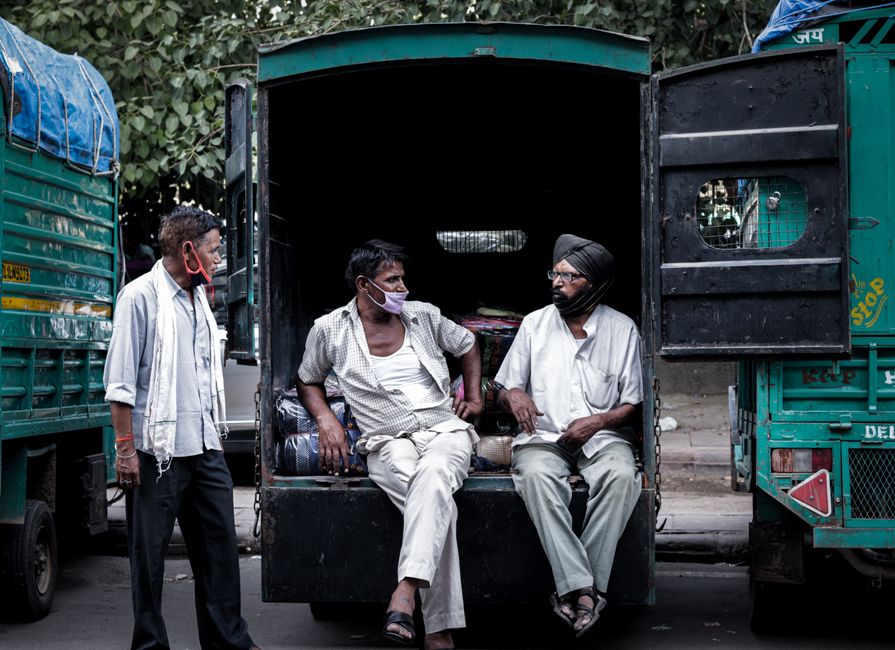
The daily scramble outside the labour exchanges on GB Road tells the story that Delhi's policymakers can no longer ignore. Every morning, thousands of migrant workers from Bihar, Uttar Pradesh, and beyond queue for casual work—construction, domestic help, street vending—in a system that remains largely unregulated despite housing nearly 8 million migrants, according to 2021 census data.
This month, as the Centre prepares its mid-year review of labour laws and the Delhi government revisits its migrant worker welfare scheme, a critical decision point has arrived. Will the capital move toward formalizing the informal sector that sustains its economy, or will restrictions tighten?
The stakes have never been sharper. Neighbourhoods like Karol Bagh, Okhla, and Chandni Chowk—historically dependent on migrant labour—are watching employment rates fluctuate. Construction sites across the Dwarka and Noida extension have already begun implementing stricter documentation requirements, pushing workers deeper into the shadows. Meanwhile, businesses report labour shortages as uncertainty grows.
The Delhi Socio-Economic Survey, conducted last quarter, revealed that 62% of migrant workers lack formal identification credentials, making them vulnerable to exploitation and ineligible for government schemes. Yet their remittances—an estimated ₹4,500 crore annually flowing out of the capital—represent lifelines for families in source states.
Migration experts and civil society organisations working across South Delhi and East Delhi are now pushing for concrete answers. Will the government expand the One Delhi One Card scheme, which currently covers only 15% of the migrant workforce? Will affordable housing near employment hubs like Gurgaon Road become a priority? Will registration systems at gram panchayat and municipal levels finally be synchronized?
The alternative—a crackdown on unregistered workers—could destabilize essential sectors. Street vendors in Chandni Chowk, domestic workers in South Delhi's residential pockets, and construction labourers in New Delhi all operate on thin margins. Formalization costs time and money most cannot spare.
International context matters too. As neighbouring countries tighten their own borders and global migration becomes increasingly politicized, Delhi faces pressure to choose between inclusive integration and restrictive policies.
The decision comes down to this: does Delhi see migrants as an economic challenge to be managed, or as integral to its future? The next 60 days will show.
This article was compiled by AI from the sources linked above and screened before publishing. See our editorial standards.
How does this story make you feel?
Spread the word
About this article
Published by The Daily Delhi
Daily brief
Free, in your inbox before 7am. Weekdays.
More in News