Delhi's Metro Ambitions: How India's Capital Stacks Up Against Global Transport Giants
As the city races to expand its rapid transit network, experts say Delhi is learning lessons—and repeating mistakes—from Shanghai, Singapore and beyond.
As the city races to expand its rapid transit network, experts say Delhi is learning lessons—and repeating mistakes—from Shanghai, Singapore and beyond.
When the Delhi Metro Rail Corporation announced its Phase IV expansion plan last year, targeting 460 kilometres of rail by 2032, planners were acutely aware they were running against the clock—and competing with some of the world's most sophisticated transport systems.
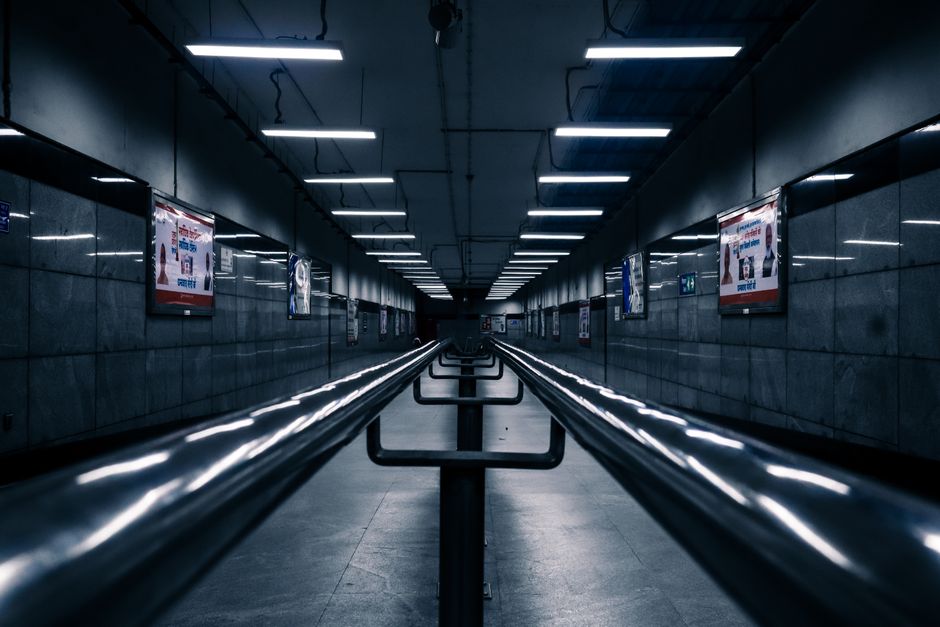
Today, Delhi's metro spans 437 kilometres across 286 stations, ferrying 6.5 million commuters daily. It's an achievement that would have seemed impossible two decades ago. Yet transport experts warn that the capital's approach to infrastructure development—marked by ambitious targets, frequent delays, and the perennial challenge of coordinating across multiple municipal bodies—mirrors struggles seen in Istanbul and Bangkok, even as it lags the seamless integration achieved in Singapore or Hong Kong.
The comparison is instructive. Singapore's integrated transport authority manages everything from land use to fares centrally. Delhi, by contrast, depends on coordination between the Metro, the Rapid Metro Gurgaon, DTC buses, auto-rickshaws, and the impending Regional Rapid Transit System—a fragmentation that transport planner Ashok Kumar notes creates "silos instead of synergy."
Consider the last-mile problem. A professional travelling from her Karol Bagh home to an office near Gurgaon's Cyber City faces a 40-minute metro journey followed by an expensive auto-rickshaw ride—a journey that in Hong Kong would be seamlessly connected through unified ticketing. Delhi's RFID cards work across metro lines, but not on buses or the proposed RRTS, forcing multiple payment systems.
The infrastructure timeline also reveals tensions. The Aqua Line extension to Noida City Centre, originally scheduled for 2018, finally opened in 2021. The Airport Express, once touted as the capital's flagship project, operates at chronic losses, partly because integration with other modes remains poor. Compare this to Singapore's MRT, which feeds directly into bus terminals and taxi stands with timed connections—or Shanghai's subway system, where developers must factor metro accessibility into all major projects.
Yet Delhi has outpaced expectations on cost. Recent metro phases cost approximately ₹650–750 crore per kilometre, significantly below global averages. London's Elizabeth Line averaged £1.1 billion per kilometre; Delhi's efficiency here reflects lower labour costs and streamlined procurement—though critics argue corners are sometimes cut.
The real challenge ahead is governance. As the city adds the RRTS and Bus Rapid Transit expansions, Delhi's Transport Department, Police, municipal corporations, and PWD must function as an integrated system. Singapore achieved this through institutional consolidation decades ago. Delhi's efforts at coordination committees remain largely advisory.
The verdict: Delhi builds fast and cheap, but not smart. Until governance catches up with ambition, the world's fastest-growing metro system risks remaining a collection of impressive individual projects rather than a truly integrated network.
This article was compiled by AI from the sources linked above and screened before publishing. See our editorial standards.
How does this story make you feel?
Spread the word
About this article
Published by The Daily Delhi
Daily brief
Free, in your inbox before 7am. Weekdays.
More in News